















Our world is a tapestry woven with intricate patterns and unpredictable chaos. From the swirling galaxies to the branching veins in leaves, understanding how order emerges from apparent disorder reveals nature’s profound logic. As explored in the parent theme, chaos is not randomness but a dynamic equilibrium—one shaped by asymmetry, emergence, temporal unfolding, perception, and cultural expression.
1. Beyond Symmetry: The Quiet Elegance of Asymmetrical Balance
While symmetry often symbolizes harmony, nature’s true elegance lies in asymmetrical balance—an equilibrium achieved not through mirrored perfection but through dynamic, adaptive relationships. This subtle coherence allows living systems to thrive amid fluctuating environments.
- Dynamic Equilibrium
- The shifting dunes of the Sahara reveal how sand grains redistribute through wind and time, creating patterns that are never identical yet remain stable. This self-organization reflects a balance where chaos fuels continual adaptation without collapse.
- Aesthetic Advantage
- Fractal trees, such as the branching of firs or the veins of a maple leaf, exhibit recursive asymmetry—each segment mirrors the whole in form yet differs in precise geometry. This pattern enhances structural resilience and efficient resource distribution.
- Functional Resilience
- In biological systems, asymmetrical balance allows for flexibility and responsiveness. The human hand, with its unique finger arrangement, achieves dexterity unmatched by symmetric designs—proof that imperfection fuels innovation.
2. Chaos as Creative Catalyst: Emergence Without Control
Chaos is not disorder but a fertile ground for emergence—where simple rules generate complex, coherent structures without central guidance. This principle underpins innovation across scales, from cellular organization to societal systems.
- Ant colonies exemplify emergence: individual ants follow basic pheromone cues, yet collectively build intricate nests with optimized ventilation and chamber distribution—no ant directs the entire design.
- Flocks of starlings shift instantly as individuals respond locally to neighbors, creating fluid, self-organized patterns that protect against predators and optimize flight efficiency.
- Cells self-assemble into tissues through biochemical signals, forming organs with precise architecture—emerging order without a blueprint.
3. Temporal Patterns: Patterns That Evolve Over Time
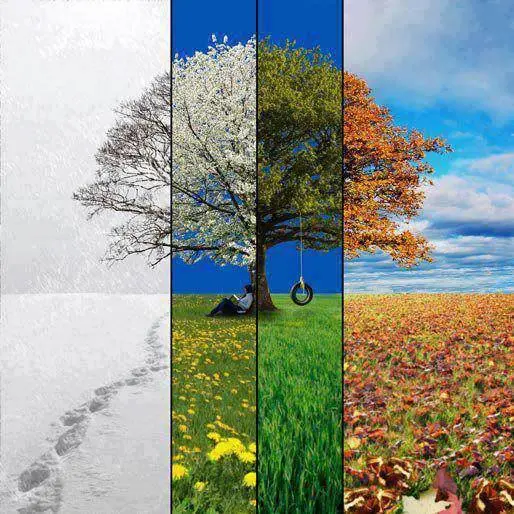
Nature’s patterns unfold and transform across time, revealing layers of rhythm and transformation. These temporal dynamics shape everything from seasonal cycles to evolutionary trajectories.
| Pattern Type | Natural Example | Key Feature | Functional Role |
|---|---|---|---|
| Seasonal Rhythms | Migratory birds, flowering cycles | Annual cycles synchronized with climate | Timing of reproduction, feeding, and dormancy |
| Growth Spirals | Pinecones, sunflower seed heads | Fibonacci sequence in phyllotaxis | Maximize space and sunlight exposure |
| Ecological Succession | Forest recovery after fire or flood | Sequential colonization by pioneer and climax species | Dynamic adaptation and resilience over decades |
4. Perception and Pattern Recognition: The Human Eye’s Role in Seeing Chaos
Our brains are pattern-seeking organs, evolved to interpret complexity as meaningful order. Cross-species, animals detect subtle chaotic cues—predator movements, resource locations—to survive and thrive.
“The eye perceives not just light, but the language of chaos—patterns hidden in noise, guides shaped by evolution’s silent hand.”
- Human Pattern Intuition
- We instinctively recognize fractal-like structures in landscapes and art, linking visual harmony to deep evolutionary roots. MRI studies show brain regions activate when viewing natural fractals, suggesting innate affinity.
- Animal Sensing
- Bees calculate flower distances using angle and distance—chaotic cues decoded into precise navigation. Owls align asymmetrical ears to pinpoint prey in total darkness through subtle sound variations.
- Bridging Modes
- While AI models improve in pattern detection, human perception remains uniquely attuned to context and intention—blending statistical inference with emotional resonance.
5. Cultural and Artistic Echoes: From Nature’s Chaos to Human Expression
Nature’s patterns inspire human creativity across disciplines—architecture, music, visual arts—where nonlinear aesthetics mirror natural complexity.
- Artistic Inspiration
- Artists like Jackson Pollock and makers of Islamic geometric art emulate fractal branching and tessellations found in coral and leaves—translating chaos into structured beauty.
- Architecture
- Modern designs incorporate biomimicry—curved forms inspired by dune shapes, ventilation systems mimicking termite mounds—where nature’s solutions inform sustainable innovation.
- Design Philosophy
- Nonlinear aesthetics reject rigid symmetry, embracing asymmetry as a dynamic balance—mirroring nature’s own approach to resilience and harmony.
6. Returning to the Root: From Chaos to Ordered Beauty
The parent theme reveals that beauty in nature arises not from perfect symmetry, but from the graceful interplay of chaos and subtle coherence. Asymmetry, emergence, temporal transformation, perception, and cultural expression form a unified pattern language—one that teaches us to see order not as rigidity, but as living, evolving grace.
- **Asymmetry** fosters resilience and adaptability.
- **Emergence** enables complexity without control, driving innovation in biology and society.
- **Temporal dynamics** reveal patterns layered across time and scale.
- **Perception** bridges instinct and insight, allowing us to recognize meaning in chaos.
- **Culture** transforms natural patterns into art, design, and meaning.
“In nature’s chaos lies the quiet wisdom of balance—where disorder births design not by design, but by evolution’s patient hand.”
Return to Understanding Chaos and Patterns: From Nature to Figoal to explore how these patterns shape our understanding of order and creativity.
| Natural Pattern Manifestations | Key Example | Function |
|---|---|---|
| Fractal branching | Trees, lungs, river deltas | Efficient resource distribution and structural strength |
| Storm spirals | Hurricanes, |
